Have you ever looked up at that towering tree in your yard and wondered if it’s still safe to have around? As beautiful as trees are, they can sometimes pose serious risks to your property and loved ones when they become unstable or diseased.
Why Tree Removal Matters
As someone who has worked with countless homeowners, I’ve seen firsthand how unexpected tree failures can cause devastating damage. The key is knowing when a tree has become a liability rather than an asset. Recognizing the signs a tree needs to be removed early, you can protect your home, family, and property from potential disaster.
Let’s explore the seven most critical warning signs that indicate it’s time to say goodbye to that troublesome tree.
1. Visible Decay and Damage
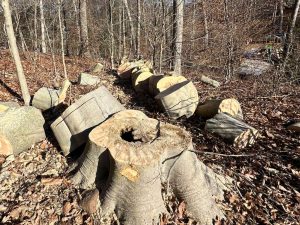
One of the most obvious red flags is visible decay. When you notice large sections of missing bark, hollow areas, or mushrooms growing at the base of the trunk, your tree is telling you something important. These symptoms indicate internal rot that seriously compromises structural integrity.
I recently helped a client who ignored a large cavity in their oak tree, only to have it collapse during a mild windstorm, narrowly missing their child’s bedroom window. Don’t wait for a close call—decay rarely improves on its own.
2. Leaning Tree Trunk
While some trees naturally grow at an angle, a sudden lean is cause for immediate concern. When a tree begins tilting, it often signals root failure or structural weakness.
Pay particular attention to any leaning tree that also shows soil heaving at the base. This combination is one of the clearest signs a tree needs to be removed and requires prompt action to prevent an imminent fall.
3. Dead or Hanging Branches
We often refer to large dead branches as “widow makers” for good reason. These heavy limbs can drop without warning, causing serious injury or property damage. When a tree has multiple dead branches, especially in the upper canopy, it indicates declining health that may warrant removal.
Look for branches lacking leaves during the growing season, brittle or cracked limbs, or any large branches hanging precariously after storms.
4. Proximity to Structures or Power Lines
Even healthy trees can become hazardous depending on their location. Trees growing too close to your home, garage, or power lines pose significant risks, especially during severe weather.
I’ve seen many cases where roots damage foundations or branches repeatedly damage roofing and gutters. Sometimes, the wisest course of action is to remove trees that are simply too close to valuable structures.
5. Extensive Disease or Insect Infestation
While minor pest issues can often be treated, severe infestations may compromise your tree beyond saving. Watch for signs like extensive leaf discoloration, numerous exit holes from boring insects, cracked areas on the trunk, and significant thinning of the canopy. When these problems affect more than 50% of the tree, removal is often the best solution to prevent the spread to neighboring trees.
6. Root Damage or Disease
Since roots are largely hidden underground, issues often go unnoticed until significant damage has occurred. Watch for fungi growing around the base, soil heaving near the trunk, abnormally small leaves, or dieback starting at the crown. Severe root problems are among the most serious signs a tree needs to be removed because they directly affect stability and nutrient uptake.
7. Multiple Trunk Cracks or Split Branches
Trees with significant cracks, especially those that extend deeply into the trunk, have compromised structural integrity. V-shaped branch unions are particularly vulnerable to splitting during storms.
While some cracks can be addressed with cabling or bracing, extensive damage often means removal is the safest option.
Why Choose SKJ Tree Removal

At SKJ Tree Removal, we understand that saying goodbye to a beloved tree is never easy. What sets us apart is our commitment to thorough assessment before recommending removal. Unlike companies that might rush to remove trees unnecessarily, we explore all options for preservation when safe to do so.
Our team brings decades of combined experience in arboriculture, using the latest techniques and equipment to ensure safe, efficient removals when necessary. We’re fully insured and committed to protecting your property throughout the process.
Check The Signs
Recognizing when a tree has become hazardous is crucial for protecting your property and loved ones. If you’ve noticed any of these warning signs, don’t delay in seeking a professional assessment.
Contact SKJ Tree Removal today for a free consultation. Our tree care experts will evaluate your tree’s condition and provide honest recommendations—whether that means preservation techniques or safe, professional removal. Your safety is our priority, and we’re here to help you make the best decision for your property and peace of mind.
Has your tree already fallen down? You can read more here about what to do when a tree falls or becomes a hazard.